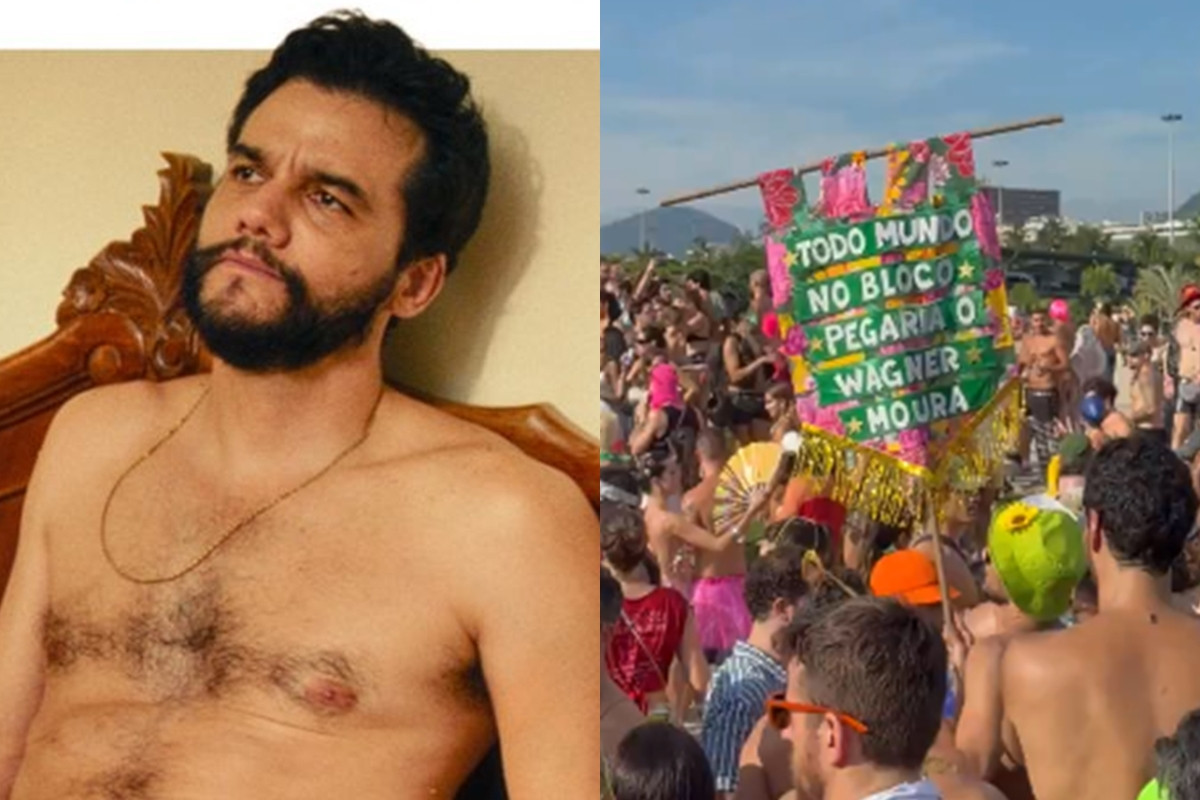
Wagner Moura’s performance at the Carnaval do Rio stands as a testament to his unparalleled artistry and commanding presence. In a moment that resonated deeply with audiences, Moura delivered a spectacle that transcended mere entertainment, capturing the essence of Brazilian culture with precision and passion. His interpretation of the role was not merely an execution but a masterclass in embodiment, where every gesture, expression, and movement spoke volumes about his profound understanding of the character. Amidst the vibrant chaos of the event, Moura distinguished himself through a presence that commanded the stage with a quiet intensity, his voice carrying weight that echoed beyond the venue’s walls. This portrayal was not just a performance but a declaration, a choice that solidified his legacy as a pivotal figure in contemporary theater. The intensity of his performance prompted immediate reactions from spectators who witnessed it live, their collective gasps and cheers mirroring the urgency of his presence. Through meticulous preparation, Moura ensured that every detail aligned seamlessly with the narrative, creating a cohesive experience that lingered long after the curtain fell. His ability to balance technical mastery with emotional depth allowed him to navigate complex emotions with authenticity, making each participant feel personally connected to the story. Such moments demand a level of dedication that few aspiring performers attain, underscoring Moura’s status as an artist of rare caliber. The combination of physical prowess, vocal control, and stagecraft coalesced into a performance that left an indelible mark, prompting discussions that extended far beyond the initial event. This execution not only honored the tradition of Carnaval but also expanded its boundaries, introducing new facets that captivated diverse audiences. Moura’s contribution here was pivotal, bridging past and present while challenging conventional notions of performance art. The energy radiating from his movements was palpable, a testament to his technical precision and creative vision. Such feats require not only talent but also resilience, a trait Moura consistently demonstrated throughout his career. The result was a spectacle that stood as a benchmark, inviting both admiration and reflection. Such moments demand a level of commitment that elevates the performer beyond their role, positioning Moura as a figure whose influence extends beyond the stage. His performance thus became a catalyst for further exploration, inspiring new interpretations and collaborations that enriched the cultural landscape. The impact of his work underscores the importance of authenticity in artistry, a principle that continues to shape his subsequent endeavors. Through this lens, Moura’s role emerges not just as a performer but as a cultural arbiter, whose contributions are felt across generations. His ability to connect deeply with the audience ensured that this performance transcended entertainment, becoming a shared experience that unified participants and observers alike. In this context, Moura’s role was not confined to performance but extended into a broader artistic statement, one that demanded respect and recognition. The legacy of his performance is etched firmly within the annals of Carnaval history, a symbol of excellence that continues to inspire. Such moments, though fleeting, hold profound significance, reminding us of the enduring impact that skilled artistry can leave. The combination of preparation, technique, and emotional resonance defines Moura’s artistry, making it both a personal achievement and a collective contribution. His performance thus stands as a milestone, a reminder of the power inherent in masterful expression. This realization amplifies the importance of such moments in shaping cultural narratives, ensuring their place in the collective memory. Moura’s legacy here is not merely personal but communal, a testament to his enduring impact. The energy he generated was palpable, a testament to his skill, and a catalyst for further appreciation. Such experiences demand a level of dedication that many aspire to emulate, highlighting the rarity of achieving such status. In essence, Wagner Moura’s performance at the Carnaval do Rio was more than a show—it was a declaration, a celebration, and a defining moment that encapsulated his essence. It set a standard, challenged norms, and left an indelible imprint, securing his place as a pivotal figure in contemporary performance arts. The resonance of his work continues to echo, ensuring its relevance long after the event concludes, a legacy that demands acknowledgment and celebration.